

Product Overview
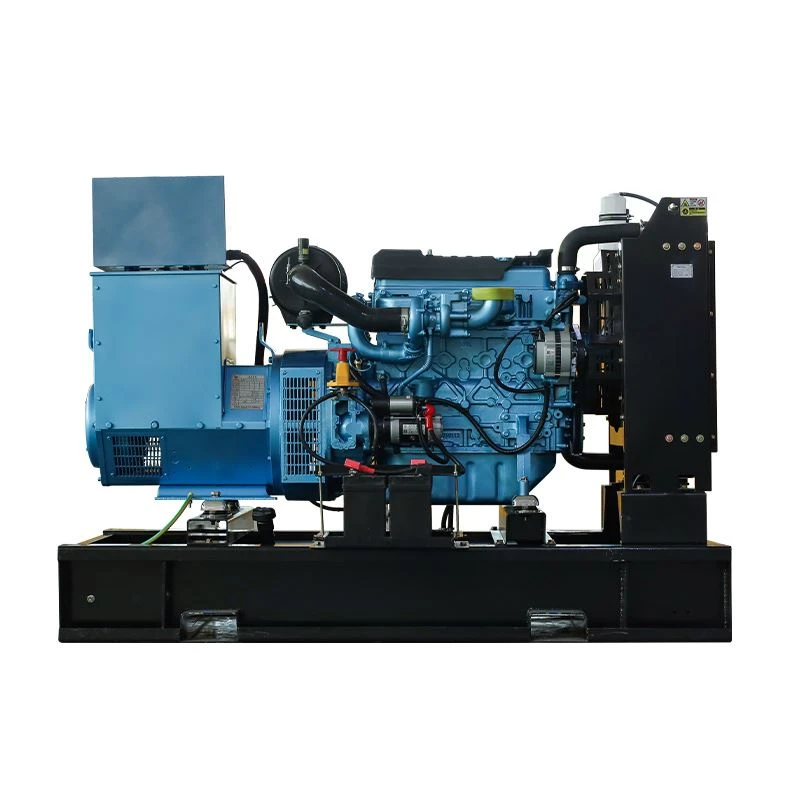
Emergency Diesel Generator Set is a diesel engine–driven generator system that converts mechanical energy into AC electrical power for standby operation during utility grid failure conditions.
Technical Specifications
|
Category |
Parameter |
Standard Value |
|
Electrical Performance |
Prime Power |
1000 kVA / 800 kW |
|
Standby Power |
1100 kVA / 880 kW |
|
|
Rated Voltage |
400 / 230 V |
|
|
Frequency |
50 Hz |
|
|
Power Factor |
0.8 lagging |
|
|
Phase |
3-phase, 4-wire |
|
|
THD |
<5% |
|
|
Engine |
Engine Speed |
1500 rpm |
|
Cylinders |
12V type |
|
|
Displacement |
38.0 L |
|
|
Aspiration |
Turbocharged & aftercooled |
|
|
Fuel Consumption (100% load) |
225 L/h |
|
|
Fuel Consumption (75% load) |
165 L/h |
|
|
Starting System |
24V electric start |
|
|
Control System |
Start Time |
≤10 s |
|
Governor |
Electronic ECU |
|
|
Protection |
Oil pressure / coolant temp / overspeed |
|
|
Structure & Environment |
Dimensions |
6058 × 2438 × 2591 mm |
|
Weight |
11,800 kg |
|
|
Noise Level |
≤75 dB(A) @ 7 m |
|
|
Ambient Limit |
40 °C |
|
|
Altitude Limit |
1000 m |
Engineering Features
Reinforced structural steel chassis is designed to withstand torsional loads occurring during emergency start and load application.
Elastomeric damping pads reduce vibration transmission to foundation structures during operation.
Powder coating provides corrosion resistance in high-humidity and coastal installation environments.
Silencer systems reduce acoustic emissions to ≤75 dB(A) at 7 meters under rated load conditions.
Automatic transfer switch initiates load transfer within 10–15 seconds under rated operating conditions.
Typical Applications
|
Application |
Usage |
Benefit |
|
Data Centers |
Backup for servers and cooling |
Supports system uptime |
|
Hospitals |
Power for critical medical systems |
Supports patient safety operations |
|
Manufacturing |
Backup for production lines |
Reduces downtime |
|
Commercial Buildings |
Standby for lifts and lighting |
Improves safety |
|
Water Treatment |
Backup for pumps and filtration |
Maintains water supply |
|
Telecommunications |
Backup for base stations |
Ensures network continuity |
Customization Capabilities
Dual-frequency alternative wiring configurations support switching between 50Hz and 60Hz systems.
Custom-sized base fuel tanks extend operational runtime up to 24 hours.
Custom control panels integrate specialized safety relays, breakers, and terminal blocks.
Custom multi-generator paralleling systems allow synchronized load-sharing across variable grids.
Quality Control & Testing
Multi-step load bank testing at 25% to 110% capacity verifies transient voltage recovery stability.
Insulation resistance inspections at 500V thresholds confirm alternator winding safety and durability.
2-hour continuous thermal imaging detects localized hotspots to ensure load stability.
Precision sound-level meters verify canopy attenuation targets against designated decibel limits.
Automated pressure decay checks on fuel plumbing prevent leakage under operational vibration.
Manufacturing Infrastructure
High-tonnage hydraulic presses form steel base frames within controlled dimensional tolerance.
Laser alignment tooling guides precise concentric coupling between engines and alternators.
Foaming equipment injects acoustic insulation material into canopy panels.
Heavy-duty overhead cranes enable safe handling and assembly of multi-ton generator units.
Specialized electrical copper busbar processing machinery ensures precise control panel wiring.
Assembly lines separate fuel system routing from high-voltage electrical wiring paths.
Compliance & Certificates
|
Certificate |
Compliance |
|
CE |
EU safety, health, environmental standards |
|
UL / cUL |
Electrical and fire safety compliance (North America) |
|
EPA Tier / Stage V |
Engine emission compliance standards |
|
ISO 9001 |
Quality management system control |
|
ISO 14001 |
Environmental management system |
|
ISO 8528 |
Generator performance rating standard |
Packaging & Delivery
- Lashing straps fix the generator chassis to container flooring during shipment.
- Desiccant silica gel packs placed inside control panels prevent moisture damage during ocean transit.
- Protective padding prevents surface abrasion during transport.
- Waterproof pouches protect manuals and wiring documents during marine transport.
- Custom-engineered steel lifting brackets facilitate balanced crane loading and unloading at destination ports.


FAQ
Q: How does the system handle high-altitude derating?
A: ECU fuel mapping and turbocharger calibration are adjusted according to site altitude conditions.
Q: Can the canopy handle high wind loads in coastal areas?
A: Structure is designed for wind load resistance up to 30 m/s (class 11) when properly anchored.
Q: How are fuel line leaks prevented during extended operation?
A: Flexible fuel lines are used to reduce vibration-induced fatigue at connection points.
Q: What is the typical lead time for standard configurations?
A: Standard production lead time is 4–6 weeks depending on configuration.
Q: Do you provide spare parts kits for initial commissioning?
A: Maintenance kits with filters and seals are supplied for commissioning use.
Q: Can the unit run on biodiesel blends?
A: Low-percentage biodiesel blends may be used if fuel quality meets engine requirements.
Q: How is the alternator protected against high humidity?
A: Anti-condensation heaters are used to reduce moisture accumulation on alternator windings.


